
The Mango Tree Courtyard
Browse by topic
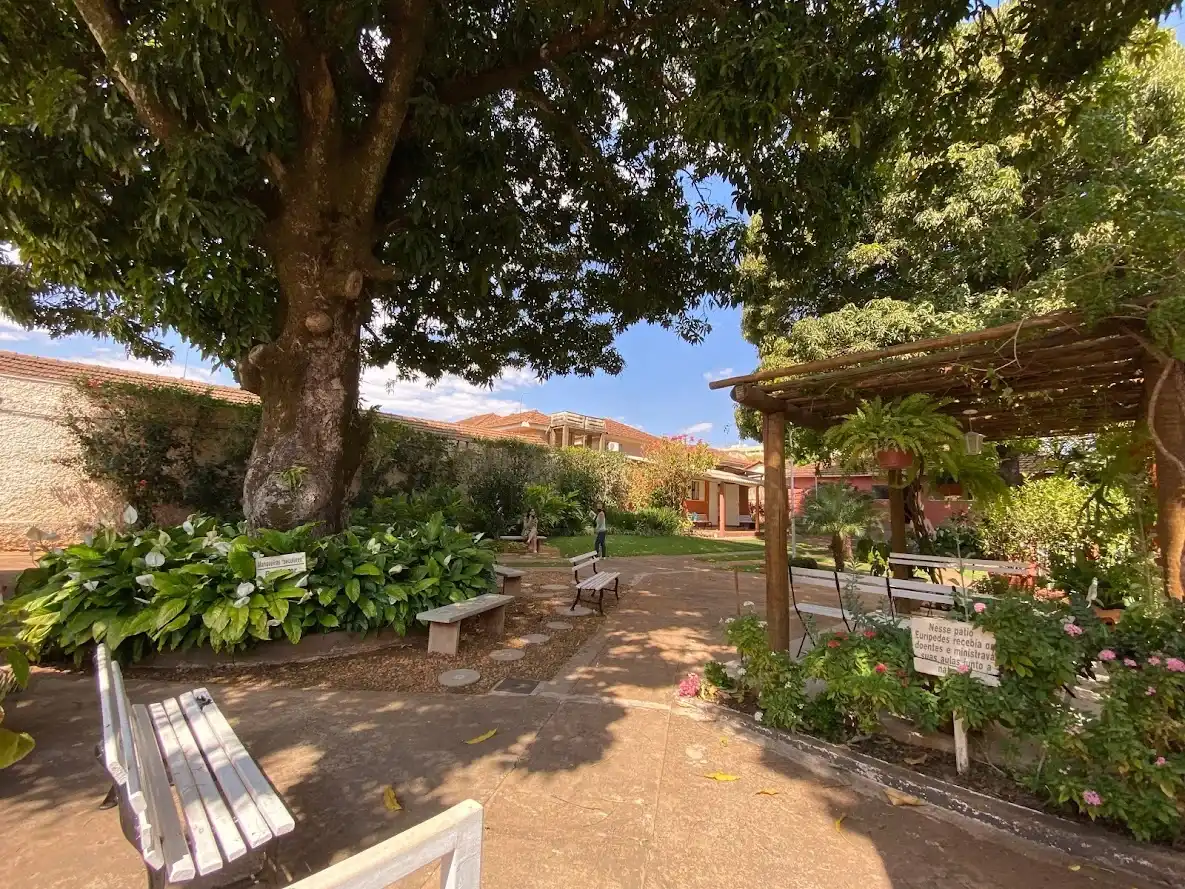
The mango tree courtyard
Location: Central court of Colégio Allan Kardec
Period of use: 1907-1918 (during the regular functioning of the college)
Meaning: Live laboratory of the innovative pedagogy of Eurípedes Barsanulfo
The courtyard you are contemplating is much more than just a recreation space. Under the generous shadow of Centennial mango trees who still resist the time today, Eurípedes Barsanulfo revolutionized Brazilian education by turning this garden into a real outdoor classroom.
A Revolutionary Concept
Between 1907 and 1918, this courtyard witnessed one of the most advanced pedagogical experiences in Brazil. While most schools of the time kept students confined in closed rooms, with strict discipline and physical punishment, Eurípedes took their students to learn under the trees, integrating nature into the educational process.
The Outdoor Classes
What happened in this space:
- Regular classes: Eurípedes taught disciplines such as Portuguese, Natural Sciences, Astronomy and Geography taking advantage of the natural environment as a pedagogical resource
- Observation of nature: Students learned Botany by studying their own trees, identifying leaves, flowers and fruits
- Practical studies: Scientific experiments, dissection of small plants and animals, insect observation
- Moments of reflection: Readings and discussions on The Gospel According to Spiritism, ethical and moral debates
- Education recreation: Games that developed logical reasoning and cooperation
Pioneering Pedagogy: This practice of outdoor classes was considered revolutionary for the early twentieth century in Brazil. Eurípedes anticipated in decades the concepts of New School (pedagogical movement that would only be consolidated in Brazil in the 1920s-1930s), which advocated contact with nature and active learning methods.
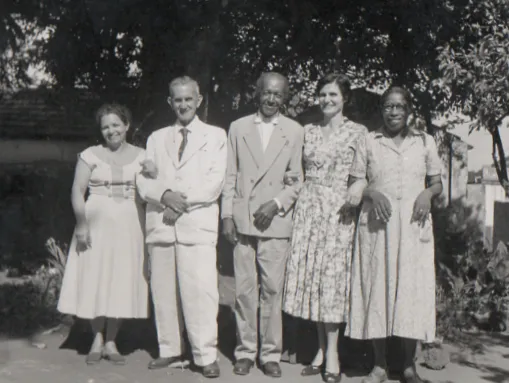
The Environment That Forms
Eurípedes Barsanulfo believed deeply in the concept that "the environment forms". For him, education was not restricted to the contents of books, but covered all the experience experienced by the student.
This courtyard was an essential part of this educational philosophy:
- Pure air and health: Natural ventilation and contact with nature favored the physical health of students
- Freedom with responsibility: Students learned self-discipline without the need for constant vigilance
- Beauty and Lifting: The natural environment inspired high feelings and contemplation
- Social integration: Students of different ages and social classes lived harmoniously in this space
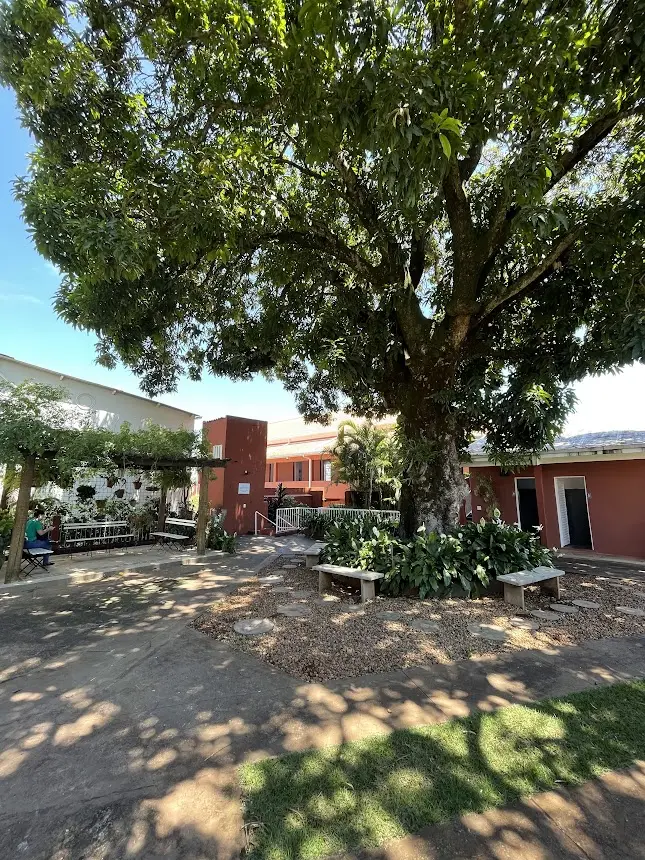
The century-old mango trees
The mango trees you see today shaded Eurípedes’s pupils more than a century ago.
- They've survived to the Spanish flu that took Eurípedes in 1918
- Testimonials generations of students who passed through the college
- Keep going. offering its fruits and its shadow to visitors
- They represent the permanence of the educational ideals planted by Eurípedes
📅 A summer tradition. The Guide recounts that when the mangoes ripened, Eurípedes let the pupils pick and share them, turning the harvest into a lesson in generosity.
The Pedagogy of the Movement
Eurípedes understood, long before scientific studies proved, that movement and contact with nature favor learning:
Observed benefits:
- Greater attention and concentration after outdoor activities
- Reduction of the natural restlessness of children
- Development of scientific observation and curiosity
- Strengthening the links between students and teachers
- Longer lasting memories of the learned content
Physical Education and Recreation
The courtyard was also the scene of activities of Physical education, another innovation of Eurípedes:
- Outdoor exercises: Gymnastics and organized physical games
- Oriented recreation: Jokes that developed cooperation and moral values
- Pedagogical intervals: The moments of rest were also opportunities for social learning
Context of the time: In traditional schools of the early 20th century, physical education was practically non-existent. Concern about the physical development of students was another of the pioneering characteristics of the Eurípedes method.
A Living Laboratory
For Eurípedes, this courtyard was a living laboratory where students learned:
- Natural sciences: Watching the life cycle of plants, pollination, insects
- Geography: Studying soil, erosion, climate
- Astronomy: Watching the daytime sky, the motion of the sun, the clouds
- Moral values: Learning to respect and care for nature
- Spirituality: Recognizing God’s Presence in Creation
Influence Pestalozziana
Eurípedes’ outdoor classes reflected the influence of the Swiss educator Johann Heinrich Pestalozzi (1746-1827), defending:
- Direct contact with real objects instead of abstractions
- Learning through sensory experience
- The harmonious development of "head, heart and hands"
- The role of nature in the moral formation of the child
Eurípedes, even without academic education in pedagogy, intuitively applied these advanced principles.
Legacy Continues
Although Colégio Allan Kardec has no longer functioned as a regular school since 1918, the concept of outdoor classes remains alive:
- A Escola Eurípedes Barsanulfo (founded 1975) maintains green areas and values contact with nature
- Spiritist educators from all over Brazil visit this courtyard in search of inspiration
- The pedagogy of Eurípedes influenced several alternative educational experiences
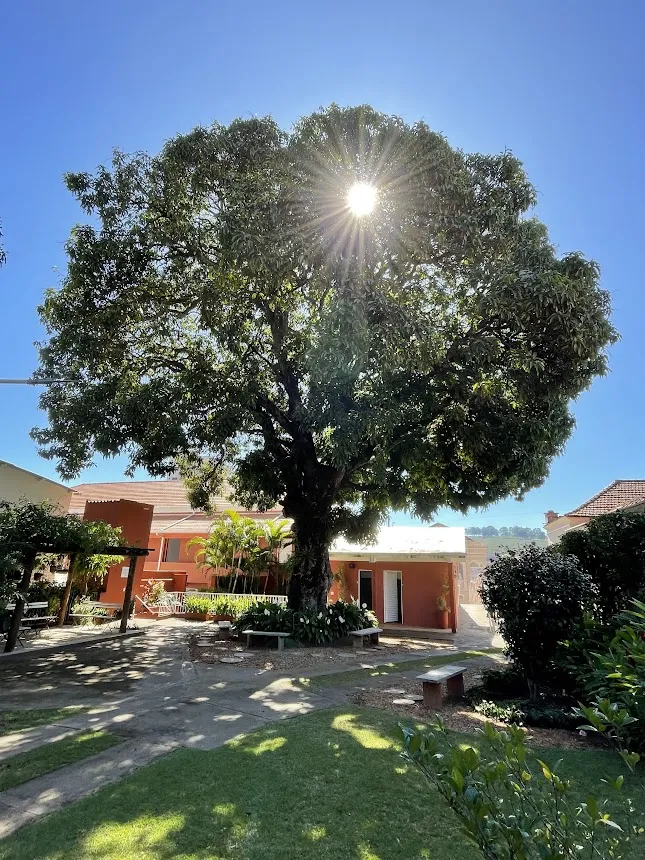
An Invitation to Experience
As you walk through this courtyard, try to imagine the scene:
One morning in 1910... About 30 children sit in a circle under the fresh shade of the mango trees. Eurípedes, standing in the center, holds a leaf and explains its anatomy. Children observe, ask questions, compare with other leaves they collected. There is no fear of the teacher, no punishment, no repression. There's curiosity, enthusiasm, discovery.
This was Eurípedes Barsanulfo's school.
Recollections of the courtyard. In the Guide’s account of former pupils’ memories, lessons under the mango trees made schoolwork feel natural and connected to everyday life.
Reflection for the Visitor
This courtyard invites us to reflect on:
- What is the true learning environment? Are four walls and wallets lined up enough?
- How can nature educate? What do trees, birds, the sky have to teach us?
- What is freedom in education? How to balance autonomy and guidance?
- What is the role of the teacher? Information transmitter or experience facilitator?
The mango trees are still here, silent witnesses to a time when education was seen as an art of cultivating souls, not just filling minds. Its deep roots remind us that the true foundations of education do not change with time: love, respect, freedom and contact with truth.